Introduction
A trip to Morocco is not limited to desert landscapes, bustling medinas and majestic mountains. It is also experienced at the table, in the aromas of spices, the warmth of shared meals and the art of hospitality that is an integral part of Moroccan culture. A true pillar of the country’s identity, Moroccan cuisine is rich, varied, generous and deeply rooted in centuries-old traditions.
Heritage and influences: cuisine at the crossroads of civilisations
Moroccan cuisine is much more than just culinary art: it truly reflects the country’s history, its migrations, its exchanges and its cultural richness. At the crossroads of civilisations, it has been built up over centuries through the contributions of different peoples who have left their mark on Moroccan territory, giving rise to a multifaceted cuisine that is refined and deeply rooted in tradition.
The Amazighs (Berbers), Morocco’s first inhabitants, laid the foundations for this cuisine. Their expertise is based on the simplicity and wisdom of local produce. We owe them couscous, the country’s iconic dish made from hand-rolled semolina accompanied by vegetables and meat, as well as the use of the tagine, the famous earthenware pot used for slow cooking, which brings out the deep flavours of the ingredients.
The arrival of the Arabs revolutionised Moroccan cuisine by introducing a wide range of spices, such as cumin, turmeric, cinnamon, ginger and saffron, which have now become the cornerstones of Moroccan recipes. They also brought with them the art of candying dried fruits such as dates and raisins, as well as the use of floral waters in pastries. Thanks to them, Moroccan cuisine has been enriched with complex flavours where sweet and savoury combine in perfect harmony.
The Andalusians, fleeing the Spanish Reconquista, brought a touch of freshness and refinement. Their influence can be seen in the generous use of aromatic herbs such as coriander, mint and parsley, in sophisticated pastries made with almond paste and honey, and in a certain finesse in the combination of dishes, inspired by the cuisine of the Muslim Spanish court.
As for Moroccan Jews, they have not only preserved many traditional recipes passed down orally, but have also contributed to the enrichment of national cuisine with ritual and festive dishes, such as dafina, cooked overnight from Friday to Saturday, or local variations of tagines, soups and homemade breads. Their contribution has helped to keep centuries-old flavours alive, respecting traditions while adding their own touch.
It is therefore in this cultural alchemy that the richness of Moroccan cuisine lies: a constant dialogue between peoples, regions, histories and beliefs. Each dish tells a part of this story, each bite is a journey to the heart of the civilisations that have shaped Morocco.
Traditional Dishes You Must Try
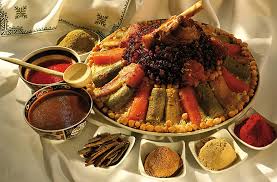
Couscous: a sacred classic
An iconic dish served on Fridays, a day of prayer and gathering, couscous is an institution. Prepared using hand-rolled semolina, it is steamed in a keskes and served with a stew of fragrant vegetables (turnips, courgettes, pumpkin, etc.) and meat (often lamb or chicken). There are several regional variations:
• Couscous tfaya (with caramelised onions, raisins, cinnamon)
• Couscous bel hout (with fish, on the Atlantic coast)
• Couscous with seven vegetables: the most traditional dish
Note: Couscous is served in a single dish, around which the family gathers. It symbolises generosity, family and sharing.
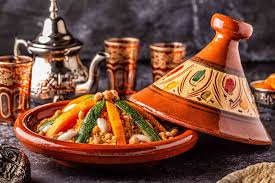
Tajine: the art of Moroccan slow cooking
The tagine refers both to the earthenware cooking dish and the recipes prepared in it. Thanks to its conical shape, slow cooking preserves all the flavours. Some famous variations:
• Chicken tagine with preserved lemon and olives
• Kefta tagine (meatballs) and eggs
• Beef tagine with root vegetables
• Lamb tagine with prunes, almonds and cinnamon: an exquisite sweet and savoury dish
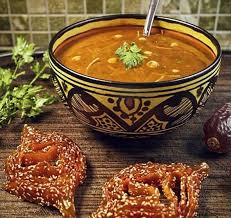
Harira: the sacred soup of Ramadan
Rich, nourishing and comforting, harira is an iconic soup in Moroccan cuisine, made with tomatoes, lentils, chickpeas, minced meat, vermicelli and a fragrant blend of fresh herbs such as coriander and parsley. It plays a central role during the holy month of Ramadan, when it is traditionally served at the breaking of the fast, accompanied by dates, hard-boiled eggs and honey pastries such as chebakia. But its popularity extends beyond the religious sphere: in Moroccan homes, it is enjoyed all year round, especially on winter evenings or in the mountainous regions of the Atlas, where it warms both body and soul. A true symbol of conviviality, harira embodies the generosity and warmth of Moroccan hospitality.
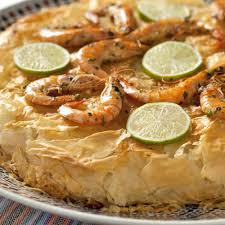
La Pastilla: the elegance of Moroccan puff pastry
Formerly reserved for special occasions and royal tables, pastilla is one of the most refined dishes in Moroccan cuisine. This festive dish elegantly combines sweet and savoury flavours in a generous filling made with pigeon (or chicken) meat, lightly scrambled eggs and roasted almonds, all subtly flavoured with mild spices. Wrapped in thin, crispy sheets of filo pastry, it is then sprinkled with icing sugar and cinnamon, offering an explosion of flavours and textures. Served as a starter at weddings and large celebrations, pastilla is a true culinary work of art that reflects the refinement of Moroccan cuisine.
Side dishes and staple foods
In Morocco, bread is not just a side dish: it is at the centre of the table and culinary culture. Whether baked in the oven, pan-fried or cooked on an upturned tagine, bread is omnipresent in the daily life of Moroccans. It often replaces cutlery and is used to take food directly from shared dishes, thus reinforcing the values of conviviality and sharing that are deeply rooted in Moroccan society. Each region and each family has its own way of making bread, according to local traditions and occasions. Here are some of the country’s most emblematic breads.
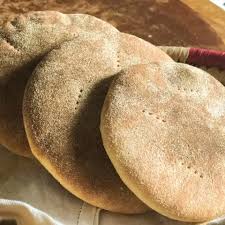
Khobz: the round bread of everyday life in Morocco
This traditional bread, round, flat and thick, is the most common in Moroccan homes. Made with wheat flour (or a mixture with semolina), it is baked in the oven, often in a wood-fired or clay oven. Its golden, crispy crust contrasts with a soft, dense crumb, perfect for soaking up the sauces of dishes such as tagines, beans or soups. It accompanies almost every meal of the day and its warm, comforting aroma when freshly baked immediately evokes a family atmosphere.
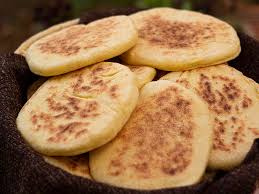
Batbout: A soft bread roll for filling
Sometimes referred to as “Moroccan pita bread”, this small round bread is cooked in a pan or on a hot plate, giving it a light and soft texture. It puffs up during cooking, forming a pocket that can be opened and stuffed. It is often filled with kefta, cooked vegetables or tuna, especially for picnics or quick meals. Warm and lightly toasted, batbout is also a staple of ftour (the meal that breaks the fast) during Ramadan.
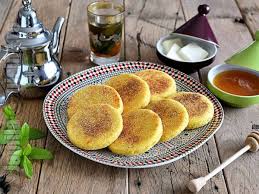
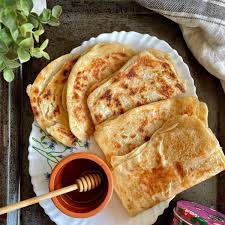
Harcha: The golden semolina flatbread
This golden flatbread made from fine semolina, butter and milk or water is cooked on a griddle or in a frying pan. Its crumbly, melt-in-the-mouth texture makes it a favourite for breakfast or teatime. It is usually eaten warm, accompanied by honey, cream cheese or jam. In some regions, aniseed or cumin is added for a more fragrant version.

Msemen (or Rghaïf): The iconic flaky pancake
A real star of Moroccan afternoon tea, these flaky pancakes are made from a mixture of flour, semolina and oil. The dough is rolled out thinly, folded into a square and then cooked in a frying pan. Served hot with melted butter and honey, they are irresistible. But they can also be filled with a savoury mixture (onions, spices, minced meat) for a more filling version. Crispy on the outside and soft on the inside, msemen are an integral part of convivial moments spent enjoying a glass of mint tea.
Pastries & Sweets: Sweet treasures of Moroccan tradition
In Morocco, sweet treats are not necessarily enjoyed at the end of a meal, but rather punctuate important moments in life: religious festivals, family ceremonies, visits of honour, or even daily tea breaks. They are often carefully prepared using fine ingredients such as almonds, honey, orange blossom water and sesame seeds, and embody Moroccan hospitality in all its splendour.
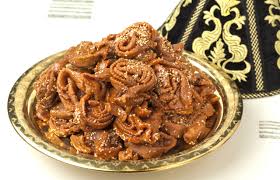
Chebakia: The golden honey flower
Chebakia is undoubtedly the most iconic pastry of Ramadan. Hand-shaped into rosettes or spirals, it is made from dough flavoured with cinnamon, aniseed and gum arabic, then fried over a low heat before being generously dipped in warm honey flavoured with orange blossom. It is then sprinkled with roasted sesame seeds for a crunchy touch. Highly energy-dense, it is traditionally served with harira soup at the breaking of the fast, but is also enjoyed throughout the year for its rich flavour and texture.
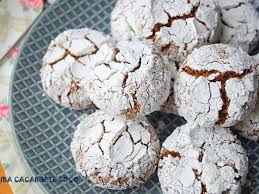
Ghriba: Soft and melt-in-the-mouth shortbread biscuit
Ghriba is a very popular pastry in Morocco, known for its crumbly texture and sweet, enveloping taste. There are several variations: coconut, almond, semolina or flour. Its slightly cracked surface is one of its visual hallmarks. Ghriba is distinguished by its apparent simplicity, which hides a perfect balance between crispiness and melt-in-the-mouth texture. It is often offered during religious festivals or served with a glass of mint tea at social gatherings.
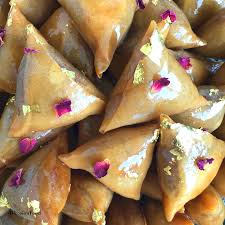
Sweet briouats: Almond and honey triangles
Briouates are small triangular pastries that combine crispiness and softness. In the sweet version, the filo pastry is filled with finely ground almond paste, flavoured with orange blossom water and sometimes enhanced with a hint of cinnamon or nutmeg. After frying, briouates are coated in golden honey, giving them an appetising shine and an intense sweet taste. Highly prized at weddings, religious festivals and engagement ceremonies, they are a symbol of culinary refinement.
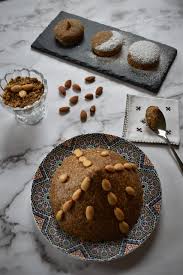
Sellou (or Sfouf): The energy of tradition
Sellou, also known as sfouf, is a traditional dish that is essential during Ramadan and periods of convalescence. This powdered mixture is made from roasted wheat flour, whole roasted and crushed almonds, sesame seeds, honey, cinnamon, aniseed and sometimes clarified butter (smen). Sellou is extremely nutritious and energy-rich, often served in a bowl or moulded into small portions, decorated with dried fruit. It symbolises generosity and care for guests and loved ones, especially during times of celebration or vulnerability.
Spices, Herbs and Flavours: The fragrant soul of Moroccan cuisine
Moroccan cuisine draws its richness from a skilful blend of spices and fresh herbs, which give it subtle, warm and captivating flavours without ever becoming overly spicy. At the heart of this alchemy of flavours lies the famous ras el hanout, a unique blend of around twenty spices (sometimes more), whose composition varies depending on the herbalist or family: cinnamon, pepper, cardamom, cloves, nutmeg, ginger, etc. Other iconic spices such as cumin, ground coriander, turmeric, dried ginger and cinnamon are ubiquitous in tagines, soups and grilled dishes. Saffron, a veritable red gold cultivated mainly in Taliouine, adds a floral and colourful touch to the most refined dishes. When it comes to fresh herbs, mint, parsley and coriander are essential ingredients in salads, marinades and the famous mint tea. In Moroccan cuisine, spices never mask the ingredients: they harmoniously enhance them, resulting in fragrant, balanced dishes that are deeply rooted in the country’s culture and terroirs.
Mint tea: a symbol of hospitality and conviviality
A true Moroccan institution, mint tea is a daily, ritualistic and symbolic drink. Prepared with green tea (gunpowder), fresh mint and a generous amount of sugar, it is served on a silver tray with small glasses.
‘Good tea should have a nice foam! ’’
Served to guests at any time, it is the ultimate gesture of hospitality.
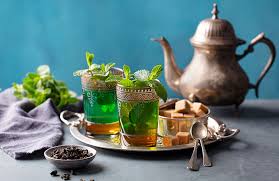
Mint tea: a symbol of hospitality and conviviality
A true Moroccan institution, mint tea is a daily, ritualistic and symbolic drink. Prepared with green tea (gunpowder), fresh mint and a generous amount of sugar, it is served on a silver tray with small glasses.
‘Good tea should have a nice foam! ’’
Served to guests at any time, it is the ultimate gesture of hospitality.
Une cuisine de partage : au cœur de la convivialité marocaine
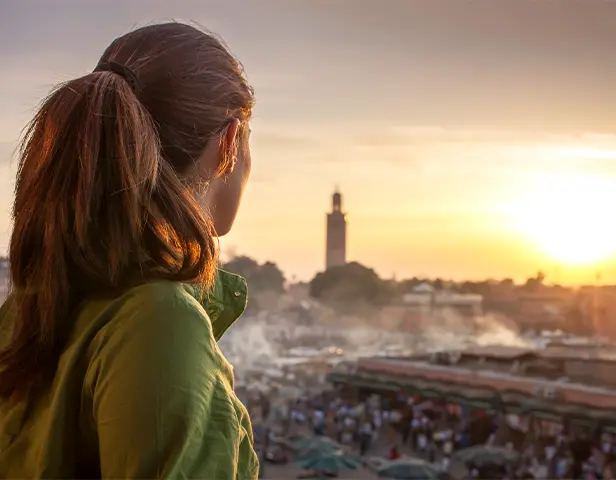
In Morocco, eating is not simply an act of nourishment, it is a social ritual deeply rooted in the culture. People gather around a shared dish, often placed in the centre of the coffee table or rug, and eat with their hands, using bread to pick up bites—a gesture that is both practical and symbolic. This way of sharing food strengthens family and community ties, encourages interaction, conversation, and the passing on of culinary traditions from generation to generation. Hospitality is a sacred value in Moroccan culture: offering food is a spontaneous act, a sign of respect, kindness and generosity. Whether it is a simple meal or a grand feast, the guest is always honoured and served first. Thus, every dish and every meal becomes an opportunity to celebrate conviviality, solidarity and the Moroccan art of living.
Where to experience Moroccan cuisine?
To fully discover the richness of Moroccan cuisine, nothing beats immersing yourself in the local culture. Staying with locals or in a guest house allows you to enjoy authentic cuisine, lovingly prepared according to family recipes passed down from generation to generation. In the bustling souks and markets, you can sample local street food: skewers grilled over charcoal, msemen fresh out of the pan, warm bread and marinated olives, all in an atmosphere full of colours and intoxicating aromas. The experience becomes even more magical when camping in the desert, where you can share a steaming tagine under the stars, accompanied by bread baked in the sand over a wood fire. And for those who want to get stuck in, cookery classes in Marrakech, Fez or Essaouira offer a unique opportunity to learn how to make your own couscous, briouates or a tasty pastilla, guided by passionate cooks. An unforgettable culinary immersion at the crossroads of senses and cultures.
Conclusion
Moroccan cuisine is much more than just culinary art: it is a true immersion into the soul of the country. It reflects Morocco’s thousand-year history, its legendary hospitality, its love of sharing and its refinement. Every dish tells a story, every spice whispers a memory, every gesture in the kitchen perpetuates ancestral know-how. Tasting this cuisine is like travelling through medinas, mountains, oases and traditions, all brought together in a single dish. Whether you are a food lover, a curious traveller or simply someone who enjoys good things in life, Morocco will always welcome you with open arms and a generous table, offering you an authentic, warm and unforgettable experience.