Geostrategic foresight, tourism engineering, and gastronomy as drivers of attractiveness
By 2026, Moroccan travel will be part of a systemic transformation process based on three key areas: geostrategic foresight, integrated tourism engineering, and identity-based gastronomy as a lever for international appeal. This restructuring is not simply a temporary adjustment, but a paradigm shift in the Moroccan tourism model.
With this in mind, The Moroccan Travel Agency Guide to the Best Morocco Destinations 2026 serves as an analytical matrix for identifying emerging trends, optimizing the territorialization of offerings, and ranking destinations according to their heritage and experiential value. Moroccan travel thus becomes a structured ecosystem, integrating logistics, premium hospitality, advanced digitalization, and sophisticated cultural storytelling.
Gastronomy plays a central role in this strategic architecture. Royal couscous, lamb tagine with prunes, pigeon pastilla, and traditional harira are no longer just culinary specialties that must be tasted; they are markers of civilization and vectors of soft power. By promoting these gastronomic pillars, The Moroccan Travel Agency Guide to the Best Morocco Destinations 2026 reinforces the immersive dimension of Moroccan travel and consolidates its symbolic capital on an international scale.
Why is 2026 a pivotal year for Moroccan travel?
2026: Structural, Logistical, and Competitive Reconfiguration
The year 2026 represents a strategic turning point for Moroccan travel. The expansion of airport hubs, improved high-speed rail connections, and increased five-star hotel capacity are repositioning Morocco as a leading Euro-African tourism hub.
In line with this dynamic, The Moroccan Travel Agency Guide to the Best Morocco Destinations 2026 enables analysis of tourist flows, segmentation of traveler profiles, and anticipation of emerging trends: immersive experiential tourism, exclusive gastronomic tours, wellness retreats in the Atlas Mountains, and premium Saharan ecotourism. Moroccan travel now goes beyond the simple logic of destination to become a comprehensive, scripted experience.
Infrastructure Expansion and Quality Upgrade
The expansion of infrastructure is accompanied by an upgrade in quality, incorporating bioclimatic design, sustainable architecture, and experiential hospitality. Hotels are promoting authentic culinary experiences, where revisited royal couscous, gourmet lamb tagine with prunes, and artisanal pastilla have become must-try dishes.
The Moroccan travel agency guide to the best Morocco destinations 2026 highlights this convergence between international competitiveness and regional authenticity, accelerating Moroccan travel in a strategy of controlled competitive differentiation.
Strategic Destinations and Centers of Excellence
Marrakech: Metropolis of Cultural Hybridization and Experiential Luxury
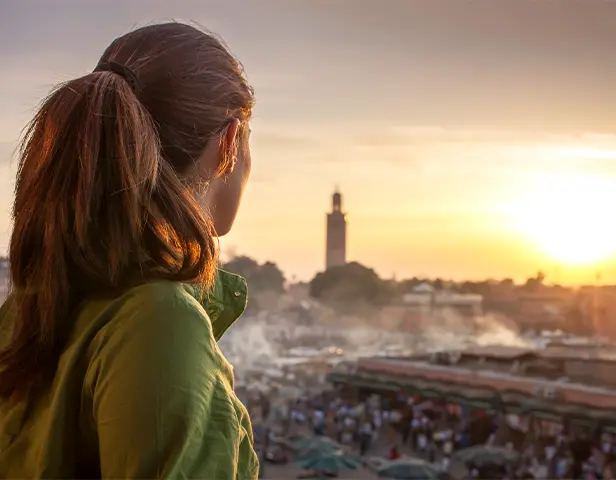
According to The Moroccan Travel Agency Guide to the Best Morocco Destinations 2026, Marrakech is the innovation hub of Moroccan travel. The UNESCO-listed medina, tadelakt riads, historic gardens, and iconic palaces form an exceptional ecosystem.
Culinary experiences that are not to be missed—royal couscous, lamb tagine with prunes, pigeon pastilla—contribute to the creation of a premium gastronomic image. The Moroccan Travel Agency Guide to the Best Morocco Destinations 2026 emphasizes that this synergy between architectural heritage and culinary excellence acts as a strategic accelerator for Moroccan travel.
Fez: Historical Depth, Transmission, and Artisanal Excellence
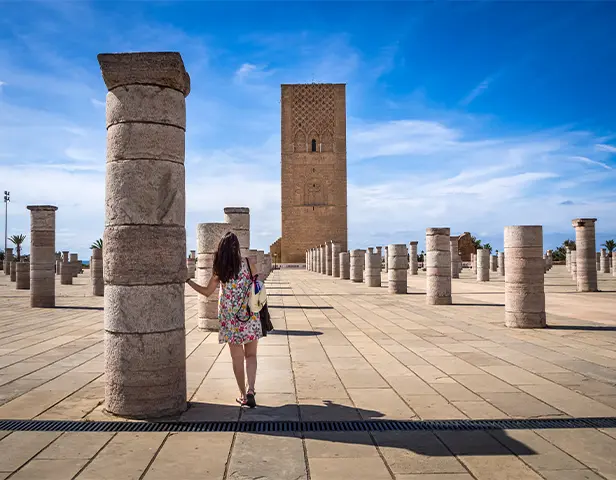
In The Moroccan Travel Agency Guide to the Best Morocco Destinations 2026, Fez embodies the intellectual and heritage depth of Moroccan travel. Its medieval urban planning, madrasas, and arts and crafts reinforce the cultural authenticity of the destination.
Traditional harira soup, Fassie pastilla, and almond briouates accompanied by mint tea are experiences that must be savored, placing Moroccan travel in a civilizational continuum valued by The Moroccan Travel Agency Guide to the Best Morocco Destinations 2026.
Merzouga Desert: Premium Ecotourism and Contemplative Luxury
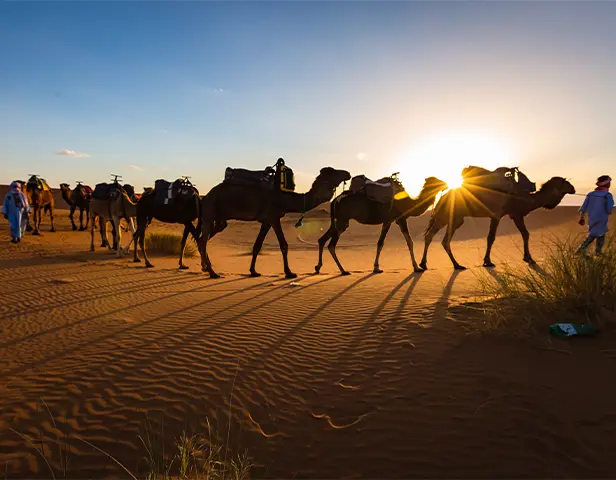
The Merzouga desert, analyzed by The Moroccan Travel Agency Guide to the Best Morocco Destinations 2026, is becoming a hub for premium ecotourism centered around silence, contemplation, and luxurious simplicity.
Saharan mechoui, traditional bread baked under the sand, and fragrant tagines are among the specialties that are a must-try, enhancing the immersive experience of Moroccan travel.
Identity-Based Gastronomy: Soft Power, Symbolic Capital, and International Differentiation
Moroccan cuisine is a strategic pillar of Moroccan travel. The Moroccan Travel Agency Guide to the Best Morocco Destinations 2026 shows that royal couscous symbolizes social cohesion, lamb tagine expresses organoleptic complexity, pastilla reflects the Arab-Andalusian heritage, and harira embodies popular tradition.
This gastronomic promotion anchors Moroccan travel in a highly symbolic experiential dynamic, strengthening its competitiveness in the international premium tourism market.
Digital Transformation, Data-Driven Tourism, and SEO Optimization
Behavioral Segmentation and Artificial Intelligence
The digitization of the tourism sector promotes advanced behavioral segmentation, predictive flow analysis, and algorithmic itinerary customization. The Moroccan travel agency guide to the best Morocco destinations 2026 incorporates these tools to improve SEO visibility and increase the performance of Moroccan travel on search engines.
Territorial Marketing and Strategic Search Engine Optimization
Semantic optimization, editorial hierarchy (H1, H2, H3), and strategic integration of the keyword “The Moroccan travel agency guide to the best Morocco destinations 2026” strengthen algorithmic relevance while maintaining qualitative informational depth.
Sustainable Tourism, Resilience, and Collaborative Governance
Ecological Transition and Social Responsibility
The Moroccan travel agency guide to the best Morocco destinations 2026 emphasizes the integration of eco-lodges, reducing carbon footprints, and promoting short gastronomic circuits. Royal couscous prepared with local products and lamb tagine from responsible farms illustrate this sustainable approach to Moroccan travel.
Multi-Stakeholder Governance and Cultural Diplomacy
Moroccan travel is becoming a tool for international influence. By promoting dishes that are a must-try—royal couscous, tagine, pastilla, harira—The Moroccan Travel Agency Guide to the Best Morocco Destinations 2026 is part of a culinary diplomacy strategy that strengthens Morocco’s image.
Conclusion:
Ultimately, The Moroccan Travel Agency Guide to the Best Morocco Destinations 2026 is a key driver for accelerating Moroccan travel on an international scale. By combining infrastructure excellence, distinctive cuisine—royal couscous, lamb tagine with prunes, pigeon pastilla, traditional harira—digital transformation, and ecological transition, The Moroccan Travel Agency Guide to the Best Morocco Destinations 2026 redefines the standards of Moroccan tourism.
Moroccan Travel thus asserts itself as a vehicle for cultural, economic, and gastronomic excellence, supported by rigorous editorial architecture, controlled semantic density, and analytical depth in line with Google’s algorithm requirements.